"Why Won’t They Just Admit It?" Understanding Anosognosia and the Myth of Acceptance
If you are caring for a loved one with dementia in the Pinellas County area, you may have found yourself trapped in a cycle of exhausting, repetitive arguments. You might watch your father struggle to figure out the remote control, or notice your mother’s bills piling up unpaid on the counter. Yet, when you gently express concern or offer help, you are met with immediate defensiveness, anger, or a baffling insistence that they are "perfectly fine."
For many families, this behavior feels like stubbornness. It feels like "denial." It is easy to think, "If I just explain the doctor's report clearly enough, or show them the unpaid bills, they will finally understand."
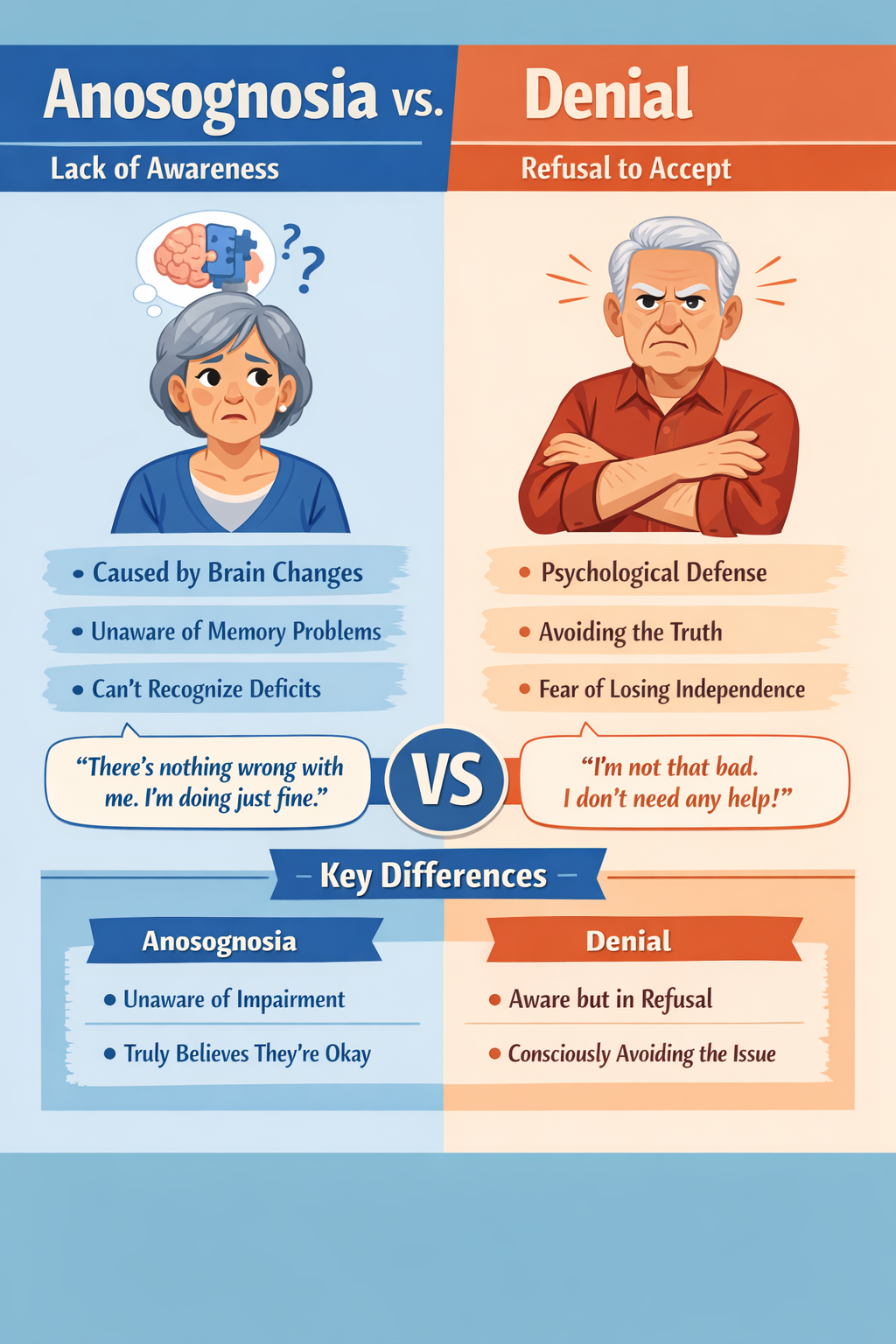
But for a significant number of people living with Alzheimer’s or Frontotemporal Dementia (FTD), this refusal to accept help is not a choice, a personality flaw, or a psychological defense mechanism. It is a distinct neurological condition called anosognosia.
Understanding this condition is the single most important step in preserving your relationship with your loved one—and it is critical when you are facing the difficult decision to move them into senior living.
It Is Not Denial: The Biology of "Unawareness"
We often use the word "denial" to describe someone who refuses to face a painful truth. But psychological denial is a coping mechanism—a way for the mind to shield itself from grief or anxiety. Deep down, a person in denial usually suspects something is wrong, even if they aren't ready to say it out loud.
Anosognosia is fundamentally different. It is a physiological symptom caused by physical damage to specific brain structures, particularly the frontal and parietal lobes of the right hemisphere. These areas of the brain are responsible for "metacognition"—the ability to monitor our own thoughts and detect errors.
The Broken "Update" Loop
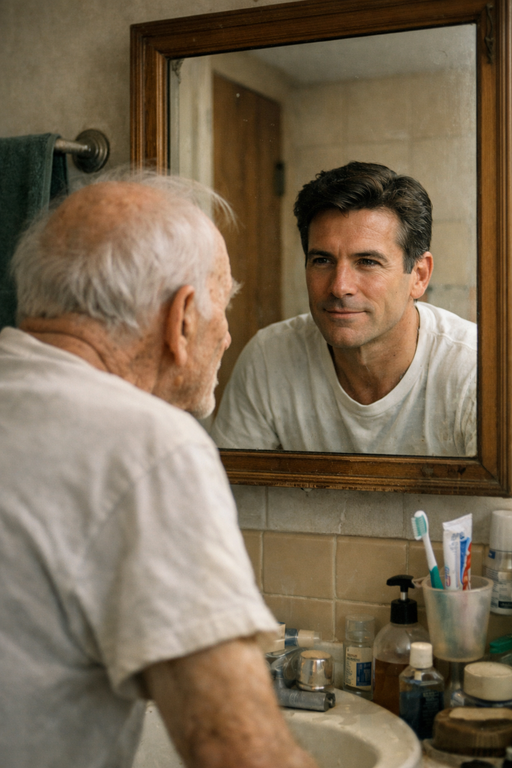
Think of the brain as having a "self-image file" that it constantly updates. When a healthy person forgets a name or trips over a step, the brain sends an "error signal" that updates this file: "I am being clumsy today" or "My memory is slipping."
In a brain with anosognosia, the network that carries that error signal is severed. The brain fails to update its self-image. Consequently, the person is operating with an "outdated self-file." They truly, genuinely perceive themselves as they were years ago: capable, independent, and sharp.
When they tell you they are safe to drive despite having three fender benders in a month, they are not lying to you. They are speaking their reality, because their brain has not recorded the failures.
Why Knowing This Changes Everything
Recognizing anosognosia can be a turning point for caregivers. It shifts the dynamic from frustration to empathy and helps explain confusing behaviors:
1. The "Confabulation" Phenomenon
You may notice your loved one making up elaborate stories to explain away a mistake. For example, if they get lost driving to the grocery store, they might say, "They changed all the street signs around," or "I decided to take the scenic route." This is called confabulation. It is not lying. It is the brain’s automatic attempt to fill in the gaps of reality to make sense of the world. They are not trying to deceive you; their brain is trying to maintain a coherent narrative.
2. The Link to Apathy
Anosognosia is frequently paired with apathy—a lack of motivation or initiative. You might be frustrated that your loved one sits in a chair all day and refuses to engage in hobbies. It is important to know that the same brain regions that cause a lack of insight also control motivation. They aren't "lazy"; their "starter motor" is broken.
3. The Safety Risks Are Real

Because they genuinely believe they are fine, they have no internal motivation to protect themselves. This leads to high-stakes risks:
- Medication Non-compliance: "Why should I take these pills? I'm not sick."
- Financial Ruin: They may insist on managing their own finances, making them prime targets for scammers or leading to utility shut-offs.
- Dangerous Behaviors: Leaving the stove on or wandering away from home because they believe they know exactly where they are going.
Communicating with Someone Who Can't "See" the Problem

If you try to use logic, evidence, or arguments to convince someone with anosognosia that they have dementia, you will fail. Arguing only leads to anger and isolation because you are asking them to agree with a reality their brain cannot perceive.
Instead of "correcting," we must focus on "connecting." Experts recommend the LEAP Method (Listen, Empathize, Agree, Partner) to lower tension and build trust.
- Listen (Without Judgment): Ask them what they think is happening. If they say, "I don't need a caregiver, I'm fine," listen to that fully. Do not contradict them immediately.
- Empathize (With the Feeling, Not the Fact): Validate their emotions. You might say, "I can see why you're frustrated. It must be annoying to have me nagging you about pills when you feel healthy." You aren't agreeing that they are healthy; you are agreeing that it is annoying to be nagged.
- Agree (Find Common Ground): Pivot to a goal you both share that has nothing to do with dementia. Examples: "We both want you to stay in your own home as long as possible," or "We both want you to get a good night's sleep."
- Partner (Work Together): Frame the solution as a way to achieve that goal. "Since we want you to stay independent, let's have a housekeeper come in to handle the boring stuff like laundry so you can relax."
The Senior Living Dilemma: The Myth of "Being Ready"
This is perhaps the most painful hurdle for families. We often hear adult children say, "I'm waiting for the right time, when Mom accepts that she needs more care."
If your loved one has anosognosia, that day will never come.
Because they cannot perceive their own decline, they will never "be ready" to move to a Memory Care community. They will never wake up and say, "You know, I think I need 24-hour supervision." Waiting for acceptance often means waiting for a catastrophic event—a fall, a fire, or a wandering incident—to force the decision.
Dealing with the Grief and Guilt
Moving a parent who is actively resisting is heartbreaking. Families often feel immense guilt, feeling as though they are "betraying" their loved one or forcing them out of their home against their will.
It is vital to reframe this: You are not taking away their independence; you are acting as their frontal lobe. You are making the executive safety decisions that their brain is physically incapable of making for itself. This is an act of protection and love, not betrayal.
Practical Advice for the Move
When reasoning is impossible, how do you navigate the move to a community?
- Stop Trying to Reason: Do not show them brochures or try to explain the features of memory care. Logic will look like an attack.
- Therapeutic Fibbing (Compassionate Deception): Frame the move around something temporary or necessary that they can accept.
- The "Maintenance" Excuse: "The house needs tenting for termites/electrical work, so we have to stay in this nice apartment for a few days."
- The "Doctor's Orders" Excuse: "The doctor wants you to do a short rehab stay to build up your strength."
- Lean on Professionals: Specialized communities, like those we work with at Home At Last, are trained in managing this specific transition. Staff use validation techniques to welcome new residents without highlighting their deficits.
- Get Clinical Backup: A diagnosis from a local specialist can provide the objective medical evidence you need to feel confident in your decision, even if your loved one disagrees.
We Are Here to Guide You
At Home At Last Senior Placement Services, we know that finding a community isn't just about tours and amenities. It’s about understanding the neurology of your loved one and finding a place that can keep them safe when they don't believe they need it.
We can help you find communities in Largo, Clearwater, and St. Petersburg that specialize in this level of care, and we can coach you through the transition strategies that minimize trauma for everyone involved.
Need help assessing if it’s time?Contact us today for a compassionate consultation. We can help you determine the safest path forward, even when your loved one can't see the road ahead.